
Small robot, big difference: My unusual school years
Kristine Streton
My name is Kristine, I'm 24 years old and I live with muscular dystrophy. Some of you may have seen me on here before, as I've previously shared my thoughts on interning at Permobil. This time I want to talk about my secondary school years during Covid-19 - and one particular opportunity that has meant a lot to me.
'Thank you' is far too small a word!
When my classmates returned home from a study trip in March 2020, the world suddenly shut down. For most, it was a strange time. For me, who is at risk, it was also a time of extra worries and many difficult choices.
My illness is something I still haven't fully accepted. From home, I learned that my muscular dystrophy does not limit my brain or my professional abilities - "it's only the physical part". Therefore, I have spent a lot of energy proving that I can do the same academically as everyone else.
In both primary and secondary school, I insisted on doing things on the same terms as my classmates. The special opportunities and considerations I could get, I often said no to because they would make it clear that I didn't have the same prerequisites as the others. Just the thought of extended time for assignments could make me feel that everyone would see that my mental capacity was not enough.
That's why I was skeptical when the Muscular Dystrophy Foundation offered me a place in their robot project. Using a robot to be present in school would show everyone how vulnerable I actually am. But after months of virtual teaching due to Covid-19, I started to think differently. When my classmates could physically show up again, it still wouldn't be safe for me. As an at-risk patient, I had to ask myself: What is the alternative? Dropping out in senior year? That was not an option for me.
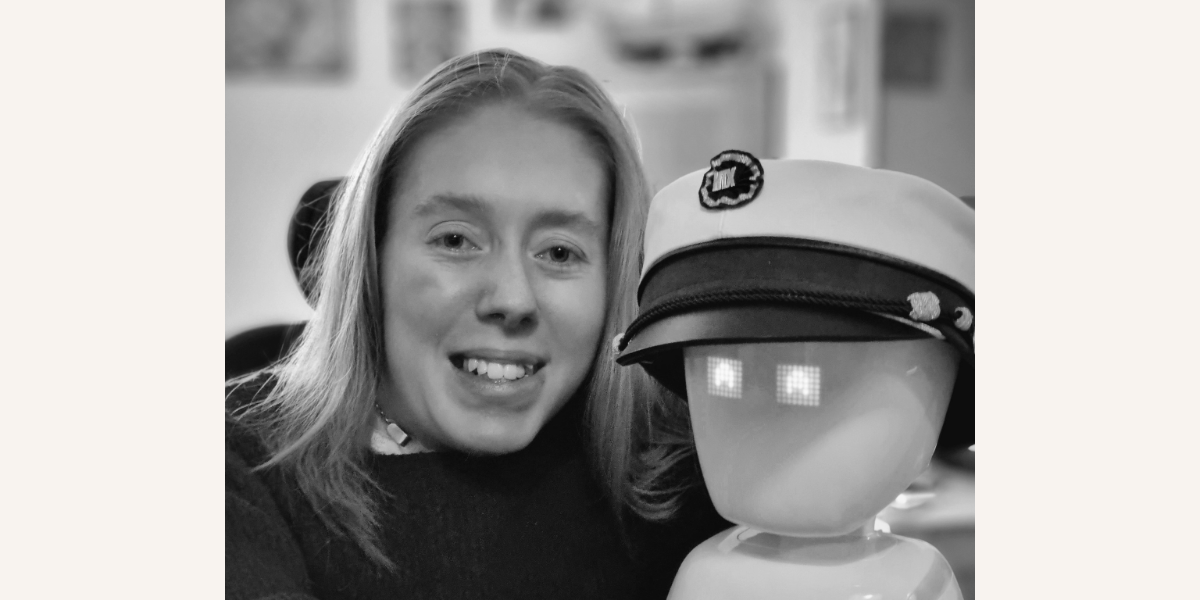
So I said yes to the robot - a little AV1 Avatar that I named Bob.
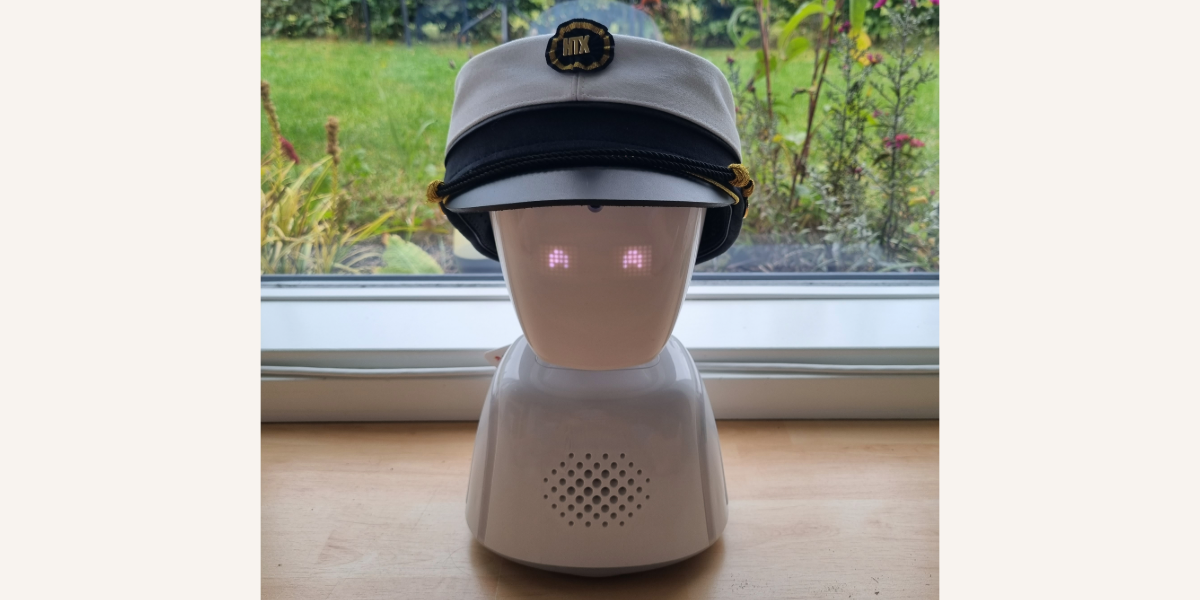
The first day my classmates came back to school, I showed up in a whole new way. I wasn't physically there, but Bob was. At first I thought it was all a bit comical and very new. But suddenly, 3-4 months had passed and all my teaching was done through Bob. I had gotten used to seeing and hearing through a robot instead of sitting in the classroom.
Of course, there were limitations - both social and technical. In the beginning, I felt awkward when someone had to point out to the teacher that "Kristine raises her hand". But gradually it became commonplace for both teachers and students. At the same time, it took a lot of willpower and self-discipline to teach virtually for so long. Getting up every morning, eating breakfast and sitting alone at my desk, knowing that the next several hours were spent in front of a tablet and a small robot, took a lot of my energy.
Often I just wanted to stay in bed. As the months passed, the uncertainty grew: When would it be safe for me to come back physically? No one could answer, but what kept me going was the dream of getting to graduate. I had been fighting for two years and refused to give up in the final year. I wanted to prove to myself and the world that graduating was something I could achieve.
Without the little (sometimes cute) robot Bob, I wouldn't have that beautiful graduation cap sitting on my bookshelf today. I wouldn't have had the experience of wearing it - or the opportunity to celebrate with my class mates.
Therefore, I can only end where I began:
'Thank you' is far too small a word!
Written by: Kristine Streton
Job Title: Marketing Intern - Permobil
City/Country: Lille Skensved, Denmark
Hobby: Electric Hockey
Personal Fun Fact: I have taken half of high school via a robot due to Covid-19. The robot was my eyes, ears and voice in the classroom that I could control with my iPad from home.