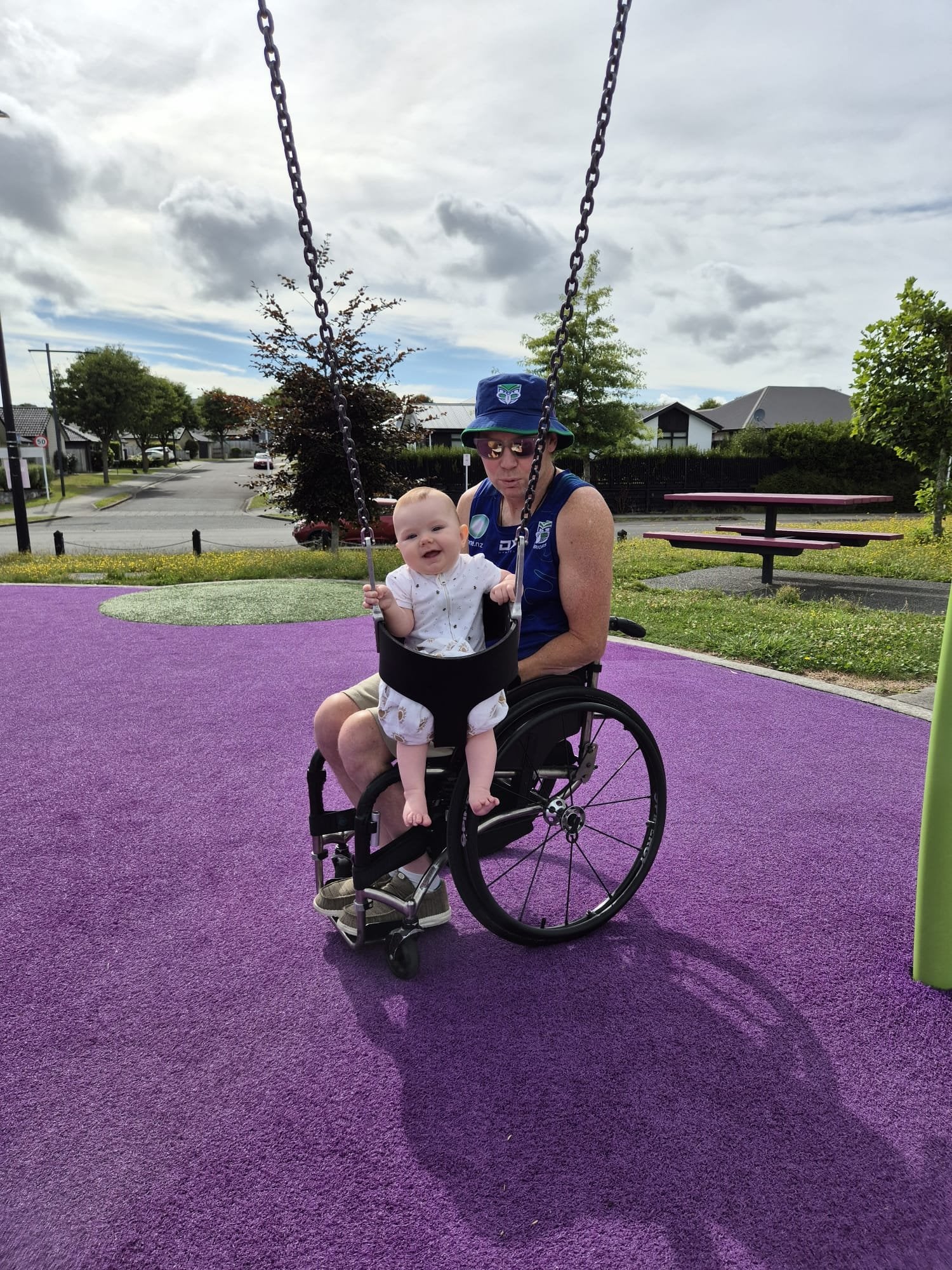

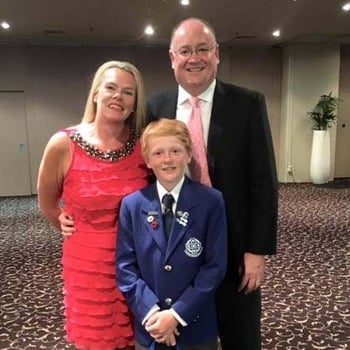
When Sally Barkman became a wheelchair user just as her son was starting high school, she feared she might no longer be the hands-on mother she had always been. Ten years later, Sally and her son Josh reflect on inaccessible homes, altered hugs, teenage boundaries and discovering that parenting differently does not mean parenting less.
Before her accident, Sally was always moving.
She had completed half-Ironman events, five marathons and long-distance swims. She cycled, ran and gave almost any physical challenge a go. That energy flowed into family life too. She was the mum running along the sideline, baking for the boys after football, helping at school and being involved wherever she could.
Then, on 1 January 2016, Sally fell from her bike. She knew immediately that she could not move her legs. Her life changed in an instant, but the timing also marked the beginning of a significant year for her son, Josh. He was 12, about to turn 13 and start high school.
While Sally was beginning to understand what her injury might mean for her body and future, she was also confronting a question familiar to many parents who acquire a disability: How can I continue to be the parent my child needs?
For Sally, that question was particularly painful because being a present mum was central to her sense of self. “One of my biggest fears was, how could I still be a hands-on mum?” she says.
When the whole family is adjusting
Josh was in another city when the accident happened. He remembers his grandmother collecting him and handing him the phone. His father tried to explain what had happened, but without seeing his mum, it was almost impossible for Josh to comprehend.
It was only when he walked into her hospital room that the reality struck him. “I just remember walking into the hospital room where Mum was and seeing her there, then breaking down and fully coming to terms with what had happened,” he says. “It was by far the most intense thing I’d ever experienced at that point in my life, and it probably still is.”
At 12, Josh had little context for what he was seeing or what might come next. People spoke about his mum possibly not walking again, but that description did not begin to capture how extensively family life might change. The hospital environment became overwhelming for him. After that initial visit, he found it difficult to return. Even now, hospitals remain uncomfortable places for him. “I’d never really been in a hospital before that moment,” he says. “Maybe that’s why I still don’t like them, because I didn’t like what I first saw in a hospital.”
For Sally, being separated from her son was incredibly painful. She wanted to see him, but she did not want to force him into an environment that frightened or overwhelmed him. “I didn’t want to traumatise him and force him to come,” she says. “I had to let him do him.”
Josh’s account confirms that giving him space was the right decision for him, even though it was difficult for Sally. His reaction was not a rejection of his mum. It was a young person’s response to a situation he had no tools to process.
There are no perfect words
Looking back, Josh does not believe there was anything his family or the medical team could have said that would have made the situation feel manageable. “You’re trying to tell someone that life is going to be okay when everything right now is not okay and is falling apart,” he explains. “There’s nothing anybody can say to make any of it okay. You have to keep going day by day until you start to see a small light at the end of the tunnel.”
Josh says it took years, rather than weeks or months, for life to feel normal again. “This is not something that just takes place over a year,” he says. “It’s a multi-year process of getting to where everything feels normal again.”
Sally also learned that children and teenagers may not respond to trauma in ways adults expect. Some ask questions immediately. Others retreat, carry on with everyday life or struggle to express what they are feeling. Their reaction may not emerge until months later, when the immediate crisis has passed and the permanence of the change begins to register. “Things fester and come out six or eight months later,” Sally says. “You suddenly realise it affected them more than you knew.”
The distance created by a staircase
When Sally first returned home, the family was living in a house with three flights of stairs.
The problem was not simply that the house was inconvenient. It's inaccessibility fundamentally affected how Sally could parent.
If Josh went to his room after an argument, she could not follow him. If he was upset and needed her, she could not reach him. Sally was limited to one level at a time, and the staircase decided which parts of family life were available to her.
Josh remembers the moment he saw the equipment needed to move his mum between floors and realised that their home was no longer viable. “She could access one room on that level, and then it was like, where do you go?” he says. “Mum would always need someone at home.”
As a teenager, Josh sometimes used those physical barriers to his advantage. He could end an argument by going downstairs, knowing his mum could not follow him. “Being able to escape seemed fine to me at the time, but it definitely hurt Mum far more than I ever truly saw on the surface,” he says.
Housing accessibility is often discussed in terms of entrances, bathrooms and transfers. All of those things matter, but Sally and Josh’s experience shows that an accessible home is also about relationships. It is about being able to reach your child, knock on their door, check whether they are all right and continue a difficult conversation.
When the family moved to a single-level home, Sally regained much more than freedom of movement. She regained access to the ordinary rhythms of parenting. “I got everything back and could do everything myself,” she says. “That was important because I’m still mum. I just did things differently.”
Josh is equally positive about the move. “I love where we live now,” he says. “Everything is set up.”
Learning new ways to show love
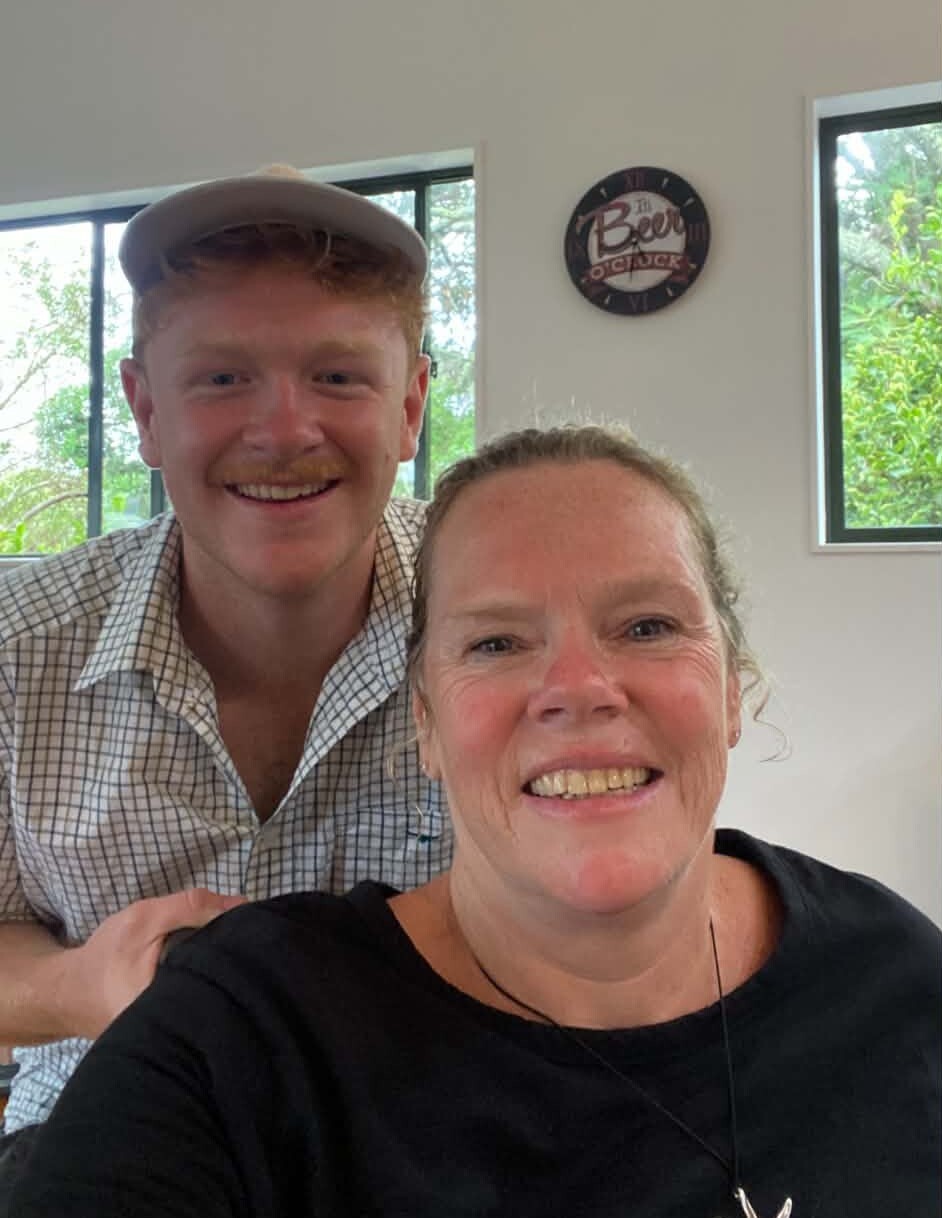
Some of the most difficult adjustments were found in moments that might appear small from the outside. Sally talks about hugs.
Before the accident, Josh knew what it was like to stand and hug his mother. Afterwards, they had to develop a new physical language. A hug from a wheelchair felt different, particularly with a boy entering adolescence and already moving towards greater independence.
Josh acknowledges that the hugs may now involve crouching down and finding a slightly awkward angle. What matters to him, however, is that his mum is still there to hug. “You still get to see them at the beginning of each day and the end of each night,” he says. “They’re only a phone call away. You just get to relearn a different way of life.”
Independence does not mean doing everything alone One of the most important steps in Sally’s return to parenting was being able to drive using hand controls. She could not initially load and unload her wheelchair independently, but she could drive. That allowed her to resume school runs, football pickups and drop-offs. “I looked like any other mum behind the wheel,” she says.
Over time, Sally’s understanding of independence changed. Independence was not simply doing every task without assistance. Sometimes it meant using equipment, allowing more time or accepting help with one part of a task so she could complete the part that mattered most.
Accepting help did not come naturally. “I’m everybody else’s village,” she says. “I’m just not very good at letting the village help me.”
Other parents and friends became part of that village. Some built temporary ramps to help Sally enter their homes. When organising social gatherings, people began suggesting places they knew would work for her. “It’s not just me, Dad and Mum who are adapting,” Josh says. “It’s everyone else we’re connected to who adapts as well.”
Still parenting through the teenage years
Sally maintained the same expectations and boundaries she had held before her accident. She was not necessarily softer with Josh, but she became more conscious that he might be dealing with things she could not immediately see. “I probably still maintained the same standards of discipline,” she says. “I was just a little bit more understanding, thinking that he might be finding it hard.”
Josh is particularly aware that there was still a great deal of parenting ahead when the accident happened. “I wasn’t 17 and about to become an adult,” he says. “I was 12. There was a lot of parenting left to be done. It could have easily gone the wrong way, but it didn’t.”
During the early months, Josh and his father also grew closer. With Sally undergoing rehabilitation in Christchurch, father and son spent more time together than they previously had. Josh saw his dad trying to support both his wife and his son while managing an uncertain future. “It made me appreciate Dad more,” Josh says. “Seeing the effort he put in, trying to be there for Mum and for me, definitely made me become a lot closer to him.”
Support does not always look like counselling
Josh’s experience also highlights the need to offer young people different forms of support.
The family tried counselling, but Josh did not feel that the counsellors he met understood either his circumstances or the experience of being a 12-year-old. He usually attended one session and did not return.
The person who helped most was his uncle. They did not necessarily have long conversations about the accident, but his uncle continued to show up and let Josh know he was available. “It’s not like we talked about it heaps, but I always knew he was there,” Josh says.
For families, this is a reminder that professional counselling can be valuable, but the relationship and fit matter. A teenager may also benefit from a trusted adult who remains consistently present without demanding that every interaction become a conversation about trauma.
“My mum is still my mum”
When I ask Josh what he admires most about his mum, he talks about the life she has built since the accident.
He has watched her become deeply involved in the wheelchair community, support other people, cycle and swim and pursue a more outward-looking life. He rejects the assumption that acquiring a disability means withdrawing from life. “There’s this negative connotation that when your life changes like this, you can’t do anything,” he says. “But now she does so much.”
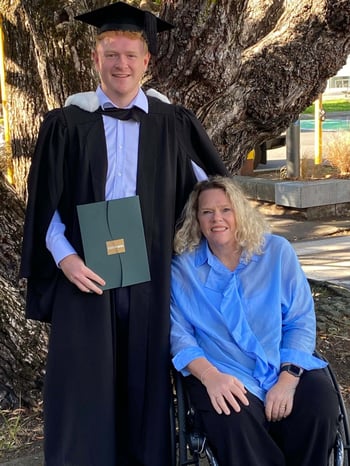
Sally’s presence has also normalised disability for Josh’s friends. They do not avoid her or treat her as separate from family life. Some have such a strong relationship with Sally and her husband that Josh occasionally arrives home to find one of his friends sitting at the kitchen table talking to his parents without him. “My mum is still my mum,” Josh says. “Just because she’s in a chair doesn’t make her any less my mum, whether she’s standing up or sitting down.”
That statement sits at the heart of their story.
The wheelchair changed how Sally carried out some parts of motherhood. It affected the time tasks took, the homes the family could live in and the places they could easily visit. It changed hugs, transport and the practicalities of arguments with a teenager.
It did not change Sally’s place in her son’s life.
Finding a new normal
Today, Josh believes the experience has made him more understanding of other people. He is careful not to attribute his entire character to the accident, but he recognises that it taught him how little we may know about what another person is facing. “You genuinely have no idea what’s going on in other people’s lives,” he says. “Just be a little kinder and more caring. Your problem might be nothing compared with someone else’s, but that doesn’t make your problem any less valid.”
His message to another teenager whose parent has recently become a wheelchair user is honest rather than sentimental. “It is going to suck at the start because you have to adapt to a whole new life,” he says. “But think about how lucky you are not to have lost a parent completely. It is going to be a change and it will be difficult, but be happy they’re still there.”
For Sally, the message she would give herself in those frightening first weeks is equally simple: “It will be okay. You will find a new way.”
The family rarely looks back at life before the accident now. Not because those memories do not matter, but because the life they have built since then is full in its own right.
“We never really think about the old life anymore,” Josh says, “because the new life is so good.”
The accident changed many things for Sally, Josh and their wider family. It changed their home, their routines and their understanding of independence. But it did not change Sally’s determination to be present in her son’s life, or Josh’s certainty about who she was.
She was still the person who worried, listened, set boundaries, showed up and loved him.
She was still Mum.
Thank you to Sally and Josh for sharing these insights and photos. ♥
This story is shared as part of the tua atu | beyond community, which brings together people with different experiences, interests and ways of participating.
Everyone’s story is different. If you would like to share yours or, or be part of the tua atu | beyond community, we’d love to hear from you - fill in our form here.